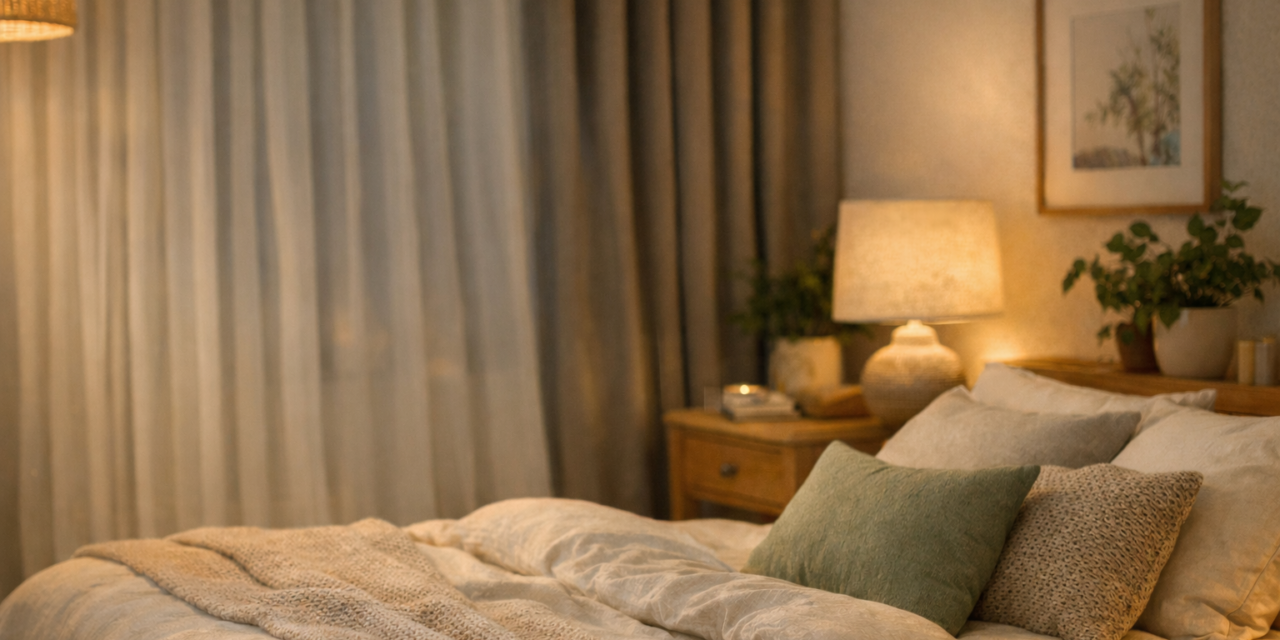
A few years ago, I realized something slightly uncomfortable: I loved my bedroom, but I didn’t actually sleep well in it.
It looked nice enough. A pretty bedspread. A lamp I liked. A chair that mostly collected clothes. But at night, my mind felt busy, my body felt restless, and sleep didn’t come easily. So I started paying attention—not to trends, but to how my room felt.
What followed were small, gentle changes. Nothing dramatic. And yet, my sleep improved.
If you’ve ever wondered whether bedroom décor really affects sleep, the answer is yes—but not in an all-or-nothing way. Think less “perfect Pinterest bedroom” and more “what helps me exhale at the end of the day.”
Here are some thoughtful, realistic bedroom décor ideas for better sleep—Cup of Jo–style: calm, personal, and doable.
Start With Colors That Feel Like a Deep Breath
Color sets the emotional tone of a room. And for sleep, softer is almost always better.
Instead of bold or high-contrast colors, try:
- Warm whites
- Soft beige or oatmeal
- Muted blues
- Sage green
- Gentle gray with warm undertones
These shades don’t demand attention. They sit quietly in the background, which is exactly what your brain needs at night.
If repainting isn’t an option, even switching pillowcases, curtains, or a throw blanket to calmer colors can change the mood more than you’d expect.
Clear the Visual Noise (Not Your Personality)
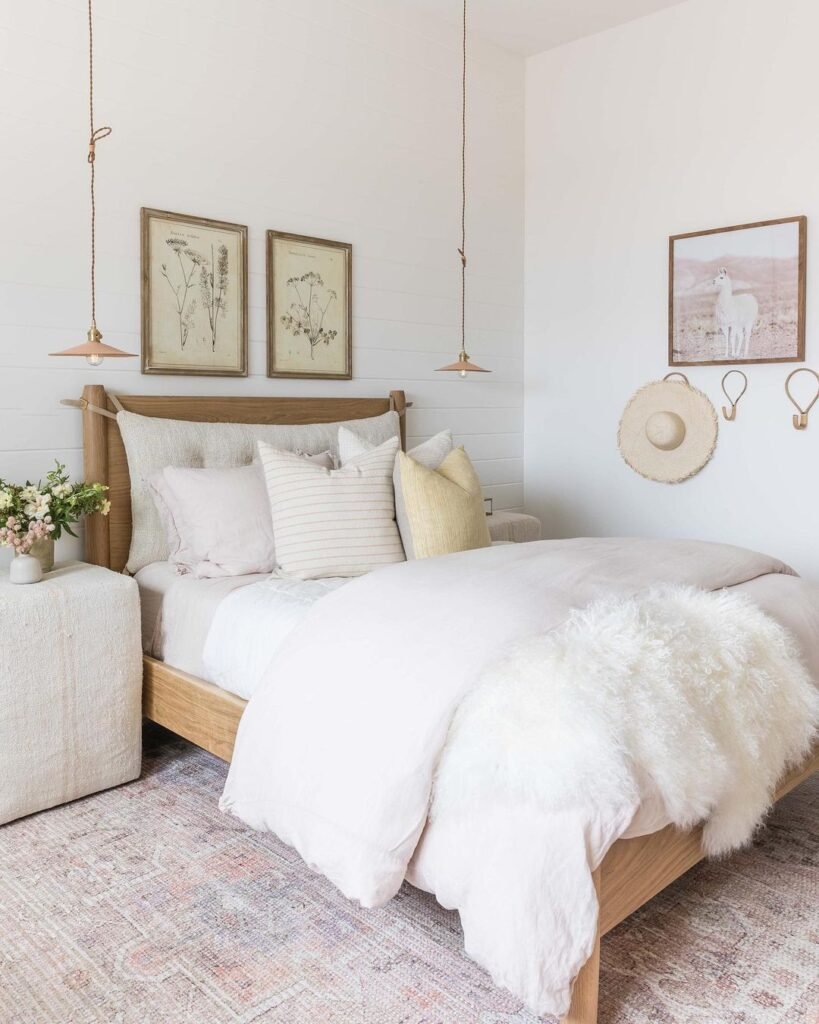
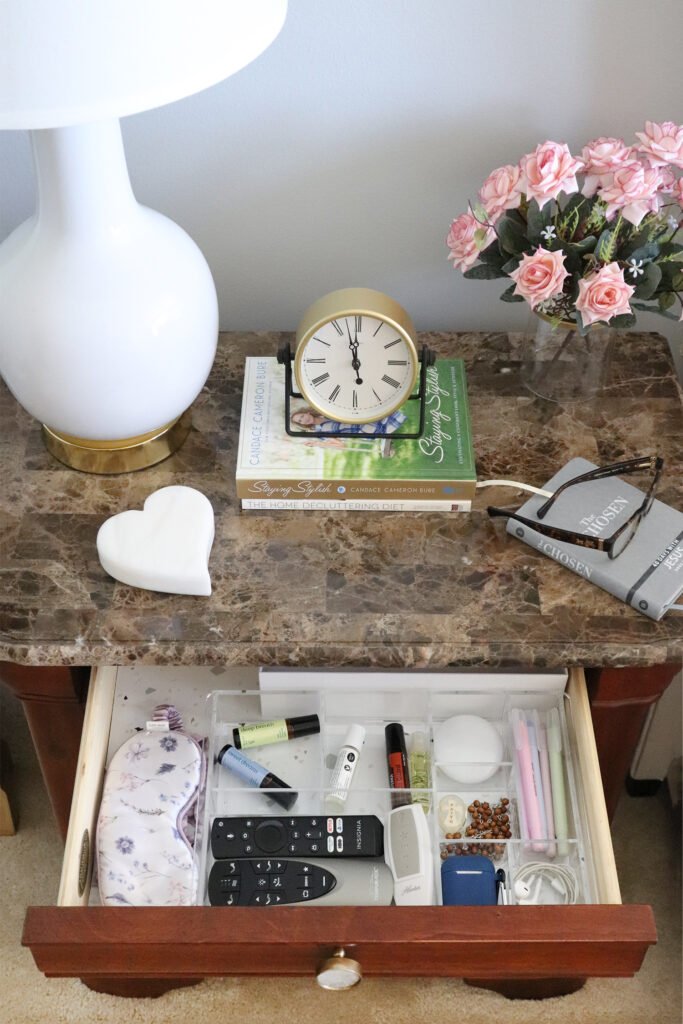
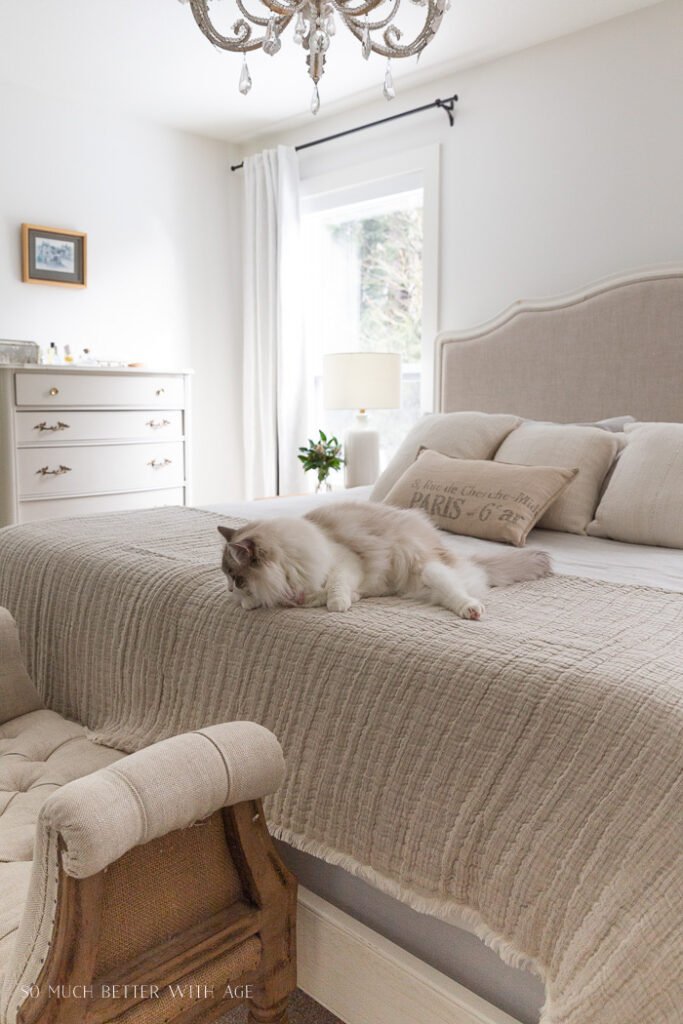
Clutter doesn’t just take up space—it takes up mental energy.
That doesn’t mean your bedroom has to be minimalist or empty. It just helps to remove anything that feels unfinished or stressful.
A few ideas:
- Clear your bedside table so it holds only essentials (lamp, book, water)
- Put piles of clothes in a basket or behind a door
- Move work papers, laptops, or gym bags out of sight
The goal isn’t perfection. It’s creating a room that doesn’t remind you of everything you still need to do.
Make the Bed the Star of the Room
Your bed should quietly invite you in.
Comfort matters more than style here, but luckily, the two can overlap beautifully.
Think:
Breathable cotton or linen sheets
Pillows that actually support how you sleep
A soft quilt or duvet that feels good against your skin
Layering helps—sheets, a light blanket, then a throw. It looks relaxed and feels comforting, like a bed you’d want to climb into early with a book.
Choose Lighting That Knows When to Be Quiet

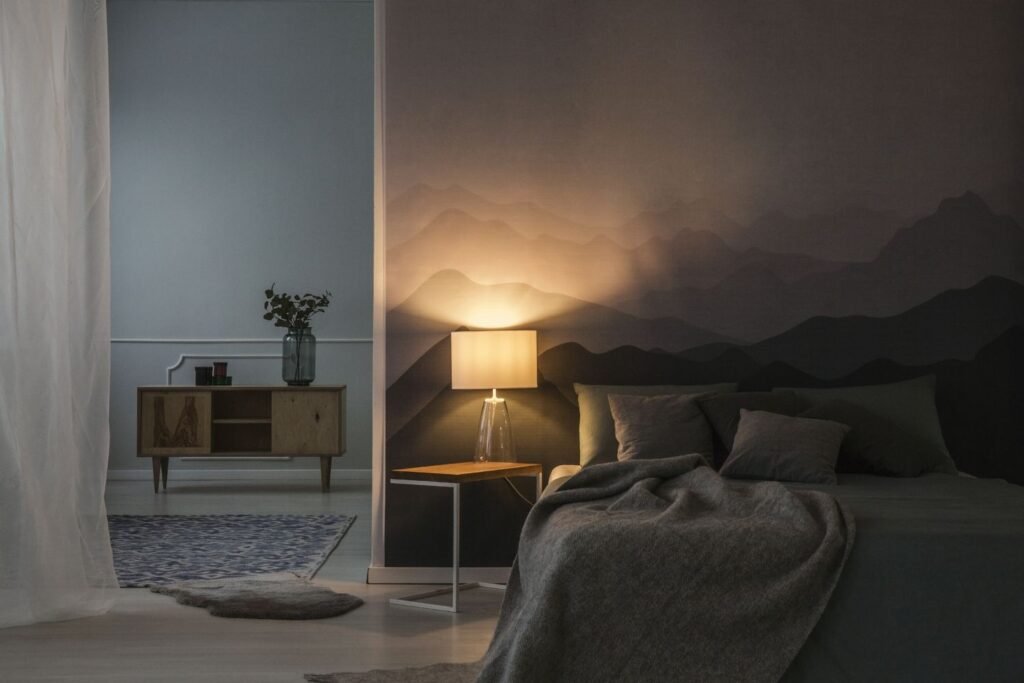
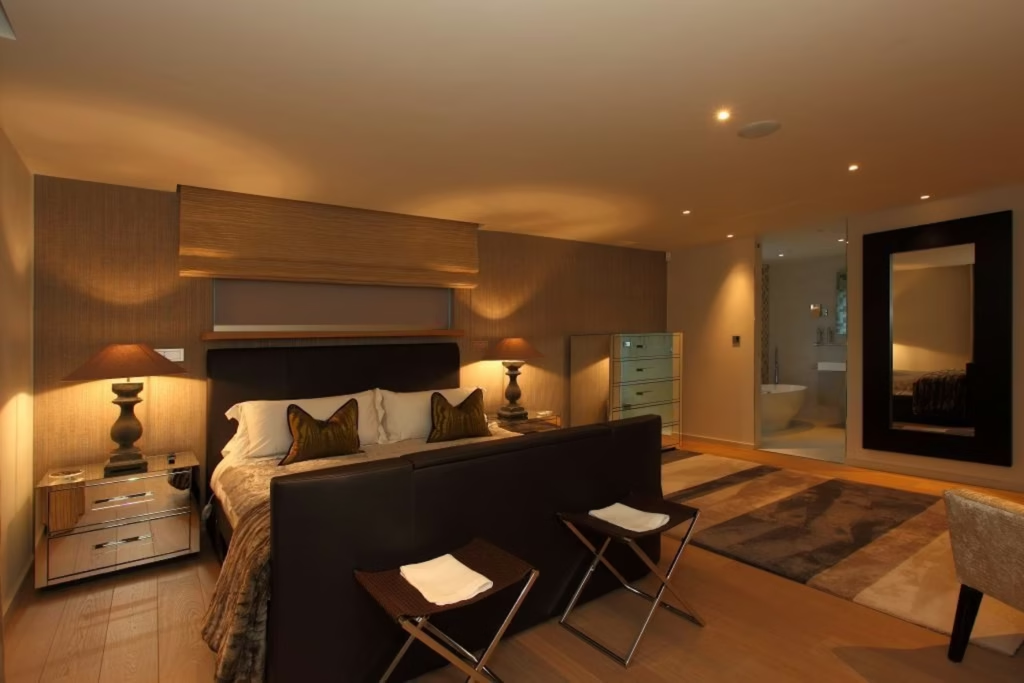
Harsh lighting is one of the fastest ways to ruin a calm evening.
If possible, avoid using bright overhead lights at night. Instead, create pockets of gentle light:
- Bedside lamps with warm bulbs
- Wall sconces
- A small table lamp in the corner
Dimmable lights are wonderful, but even switching to warmer bulbs can make evenings feel slower and more intentional.
Good lighting should whisper, not shout.
Let Curtains Do Some of the Work
Sleep loves darkness.
Blackout curtains—or even thicker, lined curtains—can make a surprising difference, especially if streetlights or early mornings sneak into your room.
They also add softness to the space. Fabric helps absorb sound, making the room feel quieter and more enclosed, like a cocoon.
If full blackout feels too heavy, layering sheer curtains with thicker ones gives flexibility and texture.
Bring in Nature, Gently
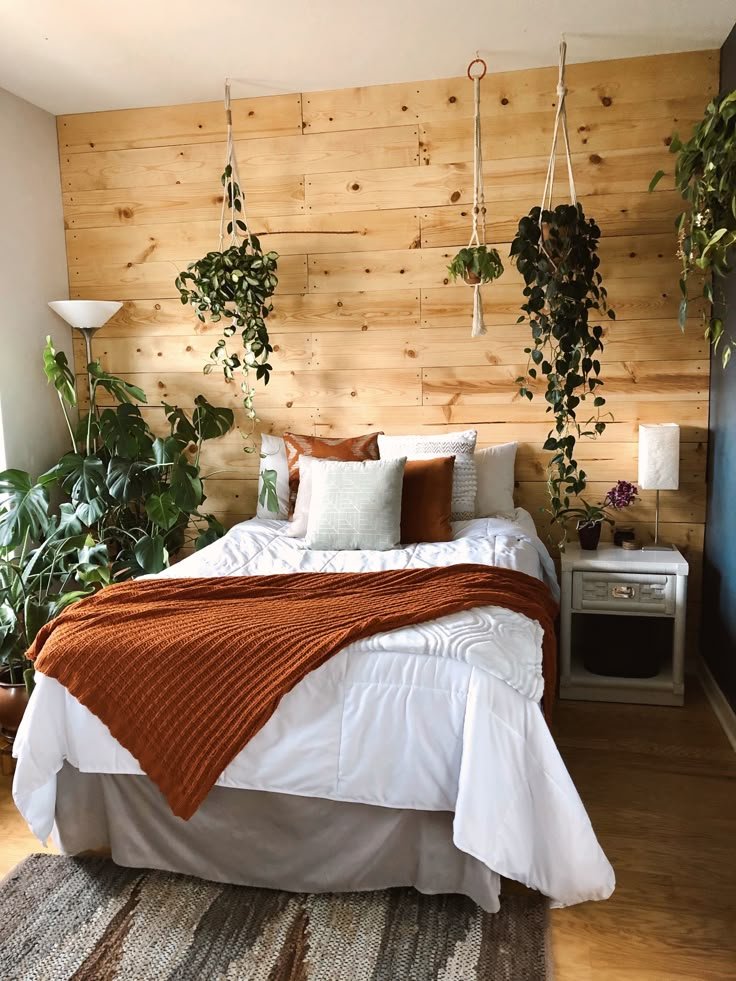
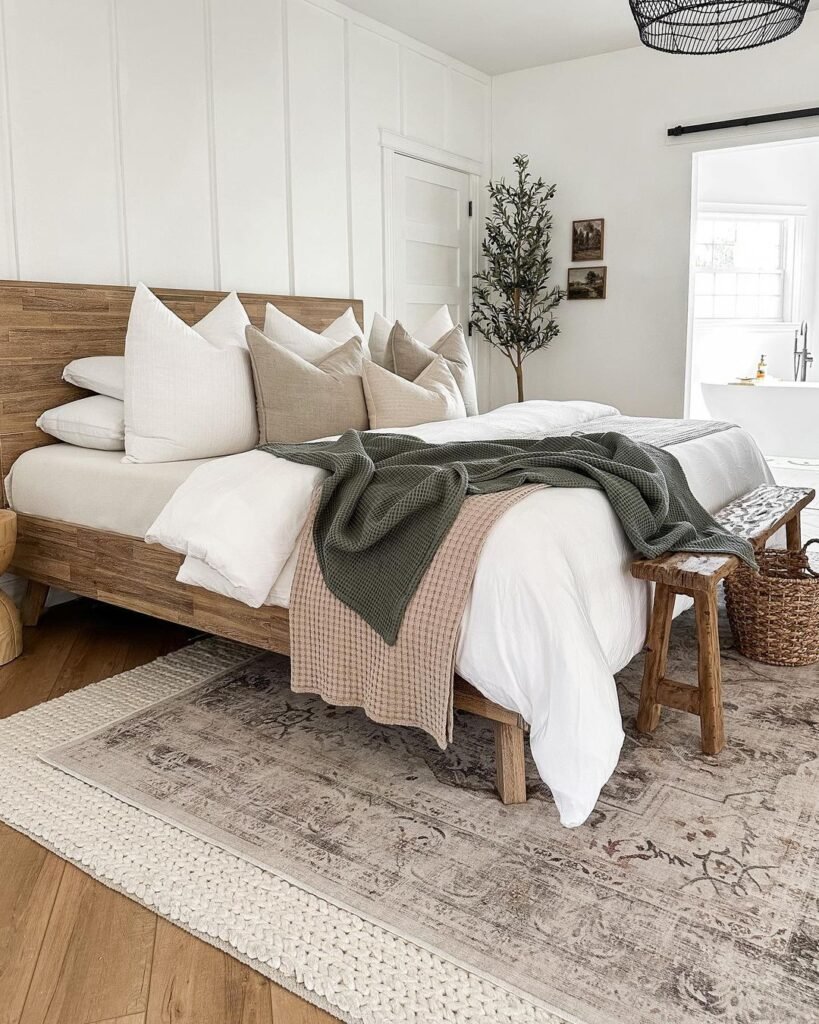
There’s something grounding about natural elements.
A small plant on a dresser. A wooden bedside table. Linen curtains that move with the air.
You don’t need a jungle. One or two simple touches are enough to make the room feel alive without being busy.
Low-maintenance plants like snake plants or peace lilies work well—and they quietly do their thing without asking much from you.
Keep Technology Out of Arm’s Reach
This one is more about layout than décor—but it matters.
If your bedroom is filled with screens, cables, and blinking lights, your brain stays in “on” mode longer than it needs to.
Some gentle shifts:
- Move the TV out of the bedroom
- Charge your phone across the room
- Use a real alarm clock instead of your phone
Your bedroom doesn’t have to be tech-free—but it helps if sleep is the main event.
Choose Wall Art That Feels Calm, Not Busy
Art should support the mood, not steal the spotlight.
Nature prints, abstract art in soft tones, or a single meaningful photograph can all work beautifully.
Instead of filling every wall, try:
- One piece you truly love
- Space around it to let it breathe
Empty space is not wasted space. It’s part of the design.
Add Texture for Warmth and Ease
Texture makes a room feel lived-in and comforting.
Think:
- A soft rug underfoot
- An upholstered headboard
- Linen, cotton, or wool fabrics
These elements don’t just look cozy—they change how the room feels when you move through it, especially first thing in the morning or late at night.
Pay Attention to Scent and Air
Finally, consider the atmosphere—not just how the room looks, but how it feels to breathe in.
Fresh air during the day helps. At night, subtle scents like lavender or chamomile can signal your body that it’s time to wind down.
Avoid anything too strong. The best bedroom scents are barely noticeable—more memory than perfume.
A Gentle Reminder
You don’t need a brand-new bedroom to sleep better.
Sometimes it’s:
- Moving a lamp
- Clearing one surface
- Changing pillowcases
- Letting the room feel quieter
Your bedroom doesn’t have to impress anyone. It only has to support you.
And when it does, sleep tends to follow—softly, steadily, and a little more easily than before.