
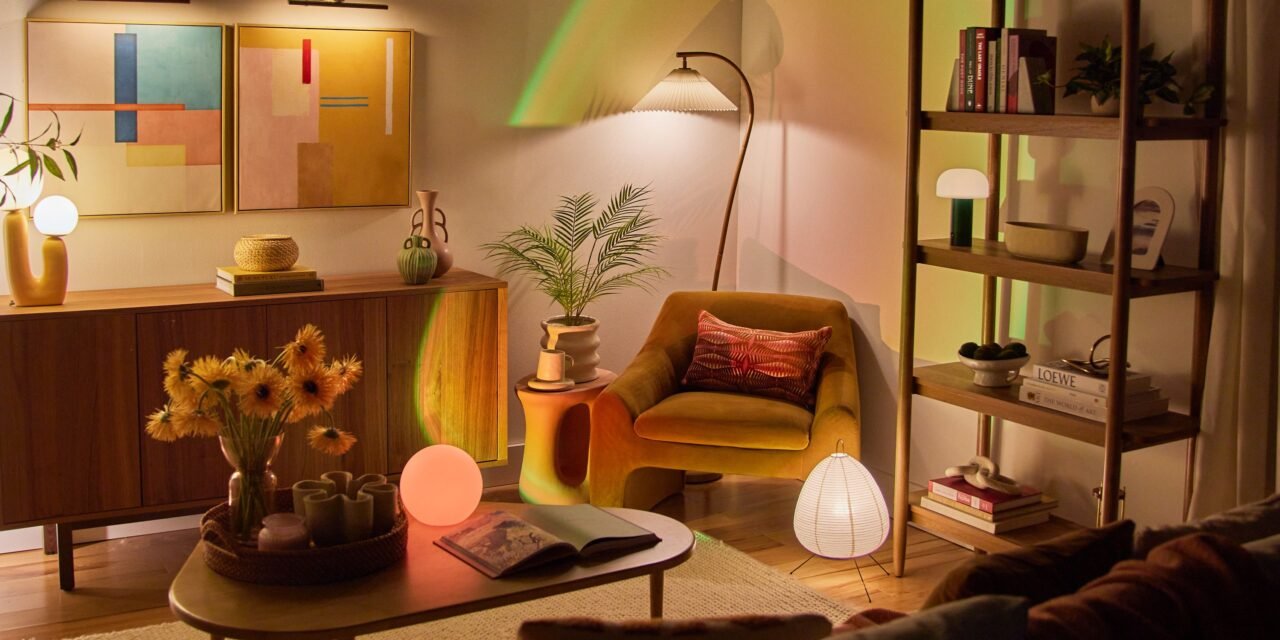
A while ago, I noticed something funny about my evenings. By the time dinner was done and the dishes were stacked (loosely, imperfectly), the lights in my home were still… very loud. Bright overhead lights, sharp shadows, no signal to my brain that the day was winding down.
I didn’t want a full smart home. I didn’t want complicated tech or anything that needed instructions longer than a page. I just wanted my home to feel softer at night.
That’s when I realized: smart lighting isn’t really about technology. It’s about mood.
If you’re curious about smart lighting—but feel intimidated—this guide is for you. Think of it as a gentle introduction. No jargon. No pressure. Just simple ways to make your home feel calmer, cozier, and more supportive of real life.
First, What Is Smart Lighting (Really)?
At its core, smart lighting just means lights you can control without getting up.
That might look like:
- Turning lamps on and off from your phone
- Dimming lights without touching a switch
- Changing light from cool to warm
- Setting lights to turn on automatically in the evening
That’s it. You don’t need sensors everywhere. You don’t need a hub-filled closet. You can start with one bulb and see how it feels.
Why Smart Lighting Feels So Good (Even in Small Amounts)
Light tells our bodies what time it is. Bright light = stay alert. Soft light = relax, slow down, rest.
When lighting doesn’t change throughout the day, our bodies get confused. Smart lighting helps restore that rhythm—quietly, in the background.
People often love smart lighting because it:
- Makes evenings feel calmer
- Reduces eye strain
- Helps with better sleep routines
- Adds comfort without clutter
It’s one of those changes you don’t notice right away—but you miss it when it’s gone.
Start Small: One Lamp Is Enough
If you’re a beginner, skip the ceiling lights for now.
Start with:
- A bedside lamp
- A table lamp in the living room
- A reading light near the sofa
Replace the bulb with a smart bulb, download the app, and that’s it. No rewiring. No tools.
The joy comes from little moments—like turning off the lights from bed or dimming the room without interrupting a conversation.
Let Your Lights Change With the Day
One of the most helpful features of smart lighting is adjustable color temperature.
Here’s a simple rule:
- Daytime → brighter, cooler light
- Evening → dimmer, warmer light
You can set your lights to do this automatically, so you don’t have to think about it.
At night, warm light feels gentler. It tells your body, you can rest now. And that matters more than we realize.
Create Simple “Scenes” (Nothing Fancy)
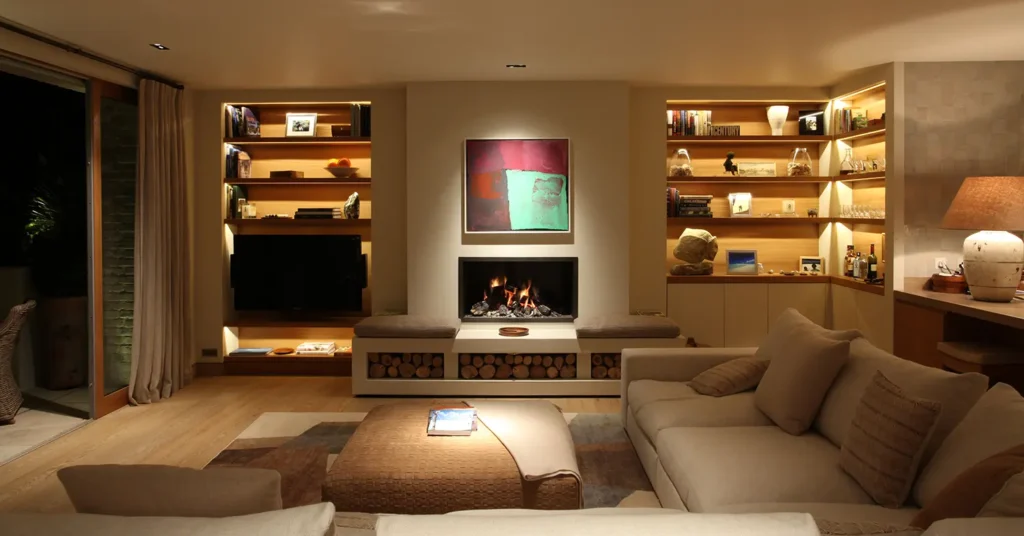
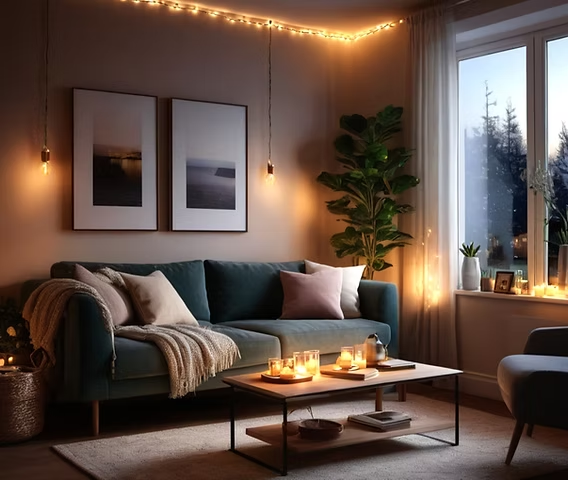
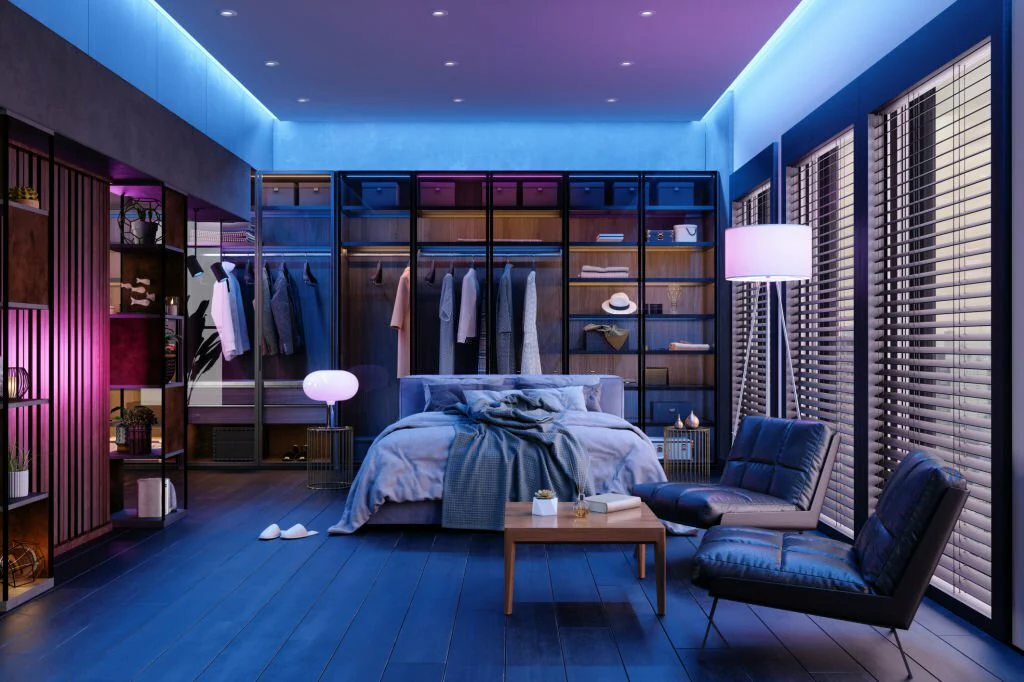
Scenes sound technical, but they’re really just moods.
You might have:
- An Evening scene (lamps on, soft and warm)
- A Morning scene (brighter, energizing)
- A Wind-Down scene (very dim, cozy)
Once set up, one tap changes the whole room. It’s like adjusting the emotional volume of your home.
The Living Room: Where Smart Lighting Shines
The living room is rarely just one thing. It’s for reading, resting, watching shows, hosting friends, sometimes working.
Smart lighting lets the room adapt.
A few gentle ideas:
- Lamps instead of overhead lights in the evening
- A dimmed light behind the TV
- Softer light in corners, not the center
The goal isn’t dramatic lighting—it’s comfort. The kind that makes people stay a little longer on the couch.
Bedroom Lighting That Helps You Sleep (Instead of Fighting It)
Bedrooms are where smart lighting quietly earns its keep.
Instead of bright lights right until bedtime, you can:
- Dim bedside lamps gradually
- Use warm light only after sunset
- Turn off lights without getting up
Some people even like lights that fade out slowly at night or turn on gently in the morning—less alarm, more easing into the day.
It’s a small kindness to yourself.
Motion Lights for the Middle of the Night
Ever stumble to the bathroom half-asleep and get blasted by bright light?
Motion-activated smart lights solve that.
They work beautifully in:
- Hallways
- Bathrooms
- Near wardrobes
The light turns on softly when needed—and off again without effort. It’s practical, but it also feels thoughtful.
Lighting That Makes Your Home Feel Lived In (Even When You’re Not There)
When you’re away, smart lighting can make your home feel gently occupied.
Lights can:
- Turn on in the evening
- Switch off at bedtime
- Vary slightly day to day
It’s not about security in a dramatic sense. It’s about continuity—your home keeping its rhythm, even when you’re gone.
Smart Switches vs Smart Bulbs (A Calm Take)
Smart bulbs are easiest. They’re perfect for lamps.
Smart switches are helpful if:
- One switch controls many lights
- You want a cleaner look
- You use ceiling lights often
If wiring feels intimidating, stick with bulbs. You can always expand later.
Soft Accent Lighting Makes a Big Difference

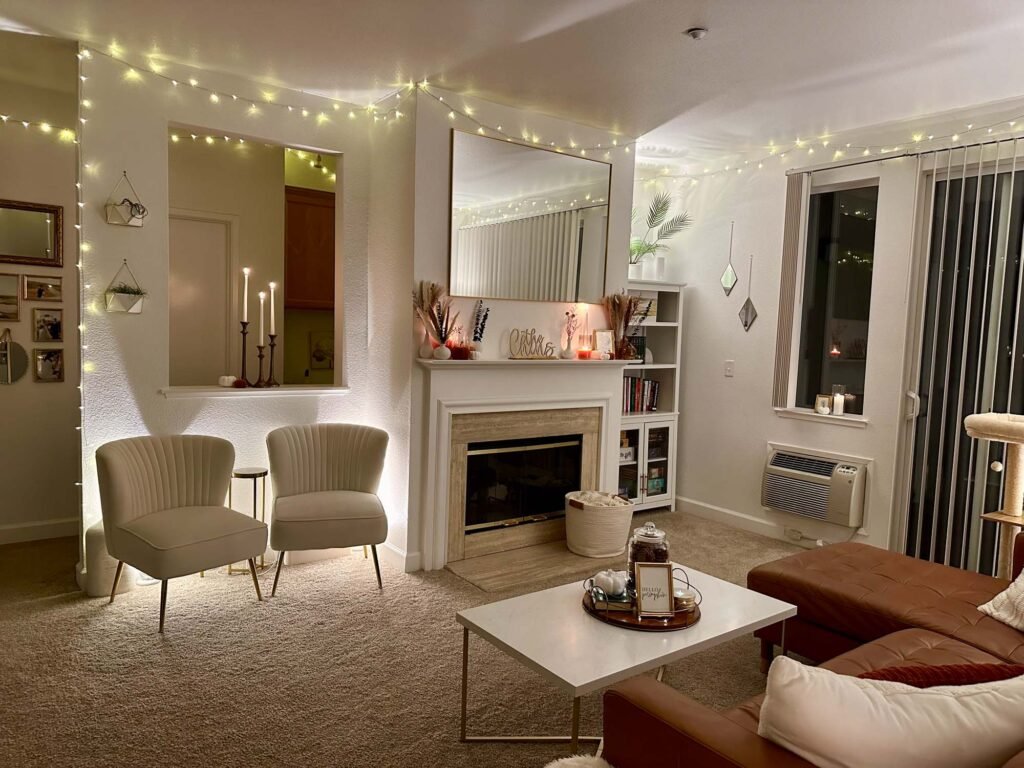
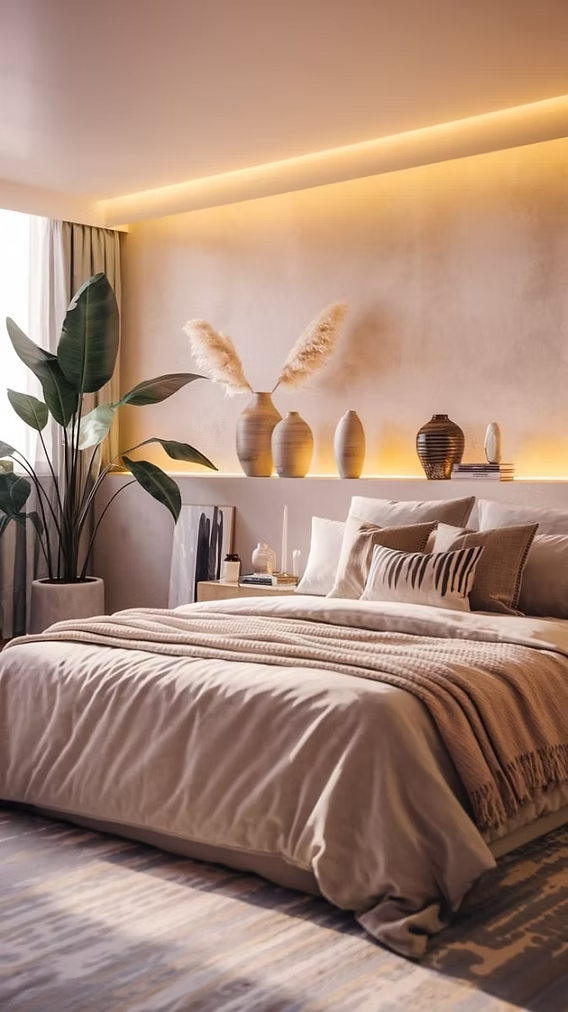
LED light strips sound flashy, but used gently, they’re lovely.
Think:
- Under a bed
- Behind a bookshelf
- Along a console
They add glow without glare. More atmosphere, less effort.
Voice Control Is Optional (But Nice)
You don’t need voice assistants—but they can be surprisingly comforting.
Simple phrases like:
- “Turn off the lights”
- “Dim the bedroom”
are especially nice when you’re tired, cozy, or already under the covers.
A Few Gentle Tips Before You Begin
- Start with one room
- Choose warm or tunable lights
- Don’t aim for perfection
- Let lighting support your real life
Smart lighting should feel like a helper, not a project.
Final Thought
Smart lighting doesn’t change your home overnight. It changes how your home feels—slowly, quietly, kindly.
It’s about softer evenings. Easier mornings. Fewer sharp edges at the end of long days.
And if all you do is replace one lamp and dim it at night?
That’s already enough.

